Selling on the water in Jupiter is different. The right buyer is weighing dock depth, bridge clearance, and seawall condition alongside views and finishes. If you plan to list in the next 6 to 18 months, a few market signals and waterfront specifics can help you time the market and price with confidence. This guide shows you what to watch, how to read it, and how to prepare so you protect your timeline and your net. Let’s dive in.
Jupiter market signals to watch
Median price and pace
City-level data helps set context. In January 2026, Redfin’s Jupiter snapshot showed a median sale price near $625,000, typical days to contract around 72, and sales averaging about 5 percent below original list price. These are broad signals, not a price for your waterfront home, but they frame buyer speed and negotiation norms.
Inventory and balance
Countywide, recent summaries show Palm Beach County has moved closer to balance, with months of supply often cited around 4 to 6 months in early 2026. Local agent reporting also notes median prices in the mid‑$500,000s and inventory near 6 months in some snapshots. Use this as context and remember it hides big differences between luxury waterfront and inland condos. See a recent county read in this Palm Beach County market update.
Cash share and buyer profile
Waterfront in Jupiter often draws cash-heavy buyers. Recent releases show Palm Beach County regularly ranks high for cash closings, with many months in the 40 to 50 percent range. That can shorten timelines and reduce rate sensitivity, especially at higher price points. Review the cash context in MIAMI REALTORS® county market reporting.
How to read the numbers like a seller
- Days on Market (DOM). If true comps on your water type are moving in under 30 to 45 days, buyers are active and you can price tighter. If DOM pushes past 90 days, expect to adjust price, condition, or concessions.
- Absorption and months of supply. This asks, “How long to sell everything on the market if no new listings appear?” As a rule of thumb, under 5 months favors sellers, 5 to 7 months is balanced, over 7 favors buyers. Learn the term and use it only for your water type with this plain‑English definition of months of supply.
- List-to-sale ratio. Early‑2026 county snapshots show sellers averaging around the mid‑90s percent of original list. Your waterfront micro‑market may run tighter or looser, so insist on a comp set for your shoreline.
- Seasonality. Spring is prime time. Local reporting shows stronger buyer activity March through May, when second‑home and snowbird buyers are in market. You can see the seasonal pattern referenced in the same county update.
Micro‑markets: what really moves value
Not all “waterfront” is the same. In Jupiter, pricing and time-to-contract shift with water type, access, and amenities. When you evaluate comps, match them to your shoreline and lifestyle features.
Loxahatchee River and tributaries
Riverfront living highlights wide water views, calmer conditions, and larger inland lots. Depth can vary for very large yachts, so buyers focus on frontage, dock configuration, and navigable depth at mean low water. Pennock Point is a good example of spacious riverfront living with low turnover and highly individualized estates. Because sample sizes are small, DOM and months of supply can swing quickly.
Intracoastal and canal-front
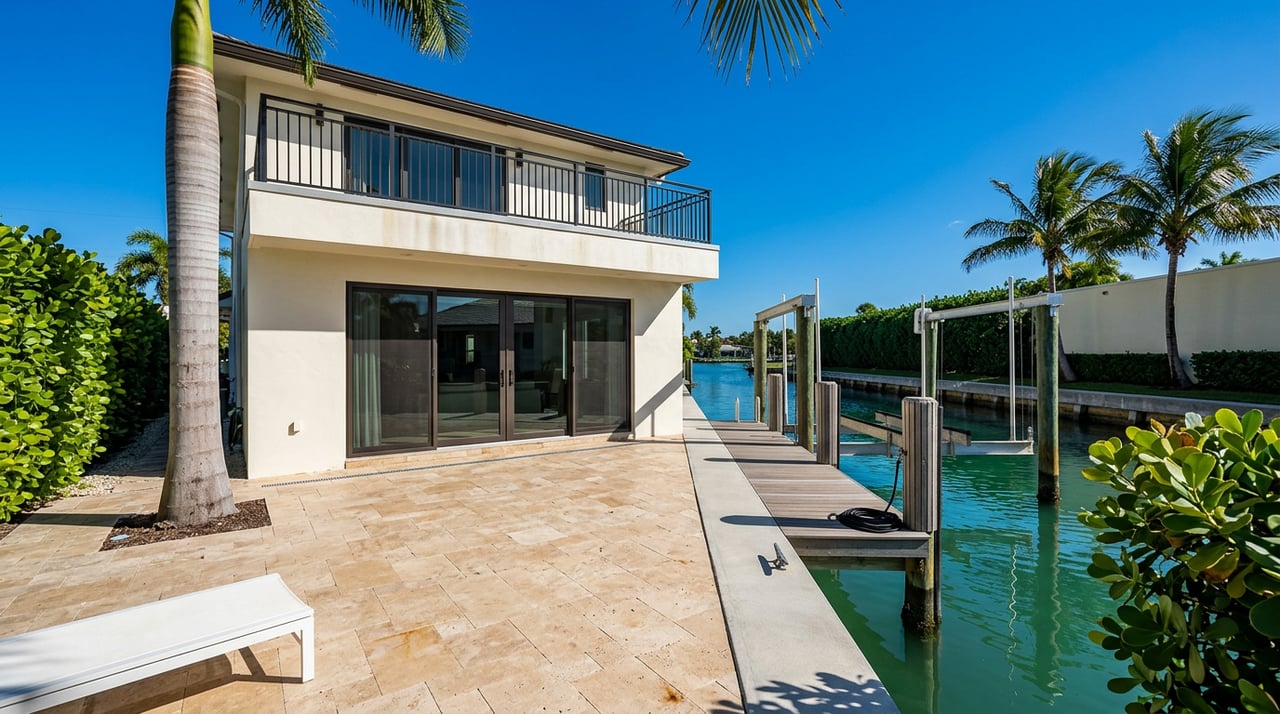
Here, dockage quality, canal depth, and seawall condition carry real weight. In yacht‑oriented neighborhoods and private marina communities, deep‑water access and managed slips command premiums. Communities like Admirals Cove promote large private marinas, deep‑water dockage, and club amenities that often support higher per‑foot pricing.
Ocean‑access and inlet-front
Immediate ocean or inlet proximity is rare and prized. Buyers evaluate elevation, dune or seawall integrity, and permitting history with extra scrutiny. Jupiter Inlet Colony offers direct ocean and inlet access with extremely low inventory. Expect a smaller but highly focused buyer pool that prices risk and access with care.
Golf and marina‑access hybrids
In places like Jonathan’s Landing and Admirals Cove, value comes from the full lifestyle package: marina capacity, golf and club services, and home features. Buyers will compare both waterfront and non‑waterfront comps inside the community to price amenity value.
Marine, permitting and risk factors you can control
Dredging, depth and bridges
Serious boaters ask three things fast: Is there no‑fixed‑bridge access, what is the depth at my dock at mean low water, and are the inlet and channels well maintained. The Jupiter Inlet District oversees inlet and channel management, including maintenance dredging. If your value hinges on deep‑water access, collect any available channel surveys or recent dredging updates to share with buyers.
Seawalls, docks and permits
Seawall integrity and dock condition are often the first items marine buyers and insurers check. Town and county approvals are required for most marine structures. The Town of Jupiter outlines permitting and natural resources review for docks, boatlifts, and seawalls on its Flood Zones and insurance information page. Before you list, gather your permit history, repair records, and any past contractor reports. A short “marine condition report” that notes seawall age, dock specs, and lift capacity goes a long way toward buyer confidence.
Flood zones, CRS discounts and insurance
Flood zone designations can change with map updates. Local guidance notes FEMA map updates effective December 20, 2024, so confirm your current zone and whether anything changed since your last renewal. Start with the Town’s flood and insurance resources.
Palm Beach County and the Town of Jupiter participate in FEMA’s Community Rating System (CRS), which can provide premium discounts to qualifying properties in Special Flood Hazard Areas. You can learn more about the program and local participation on the county’s CRS information page.
If a buyer needs new flood coverage, note that standard NFIP policies typically carry a 30‑day waiting period, with a few closing‑related exceptions. See the basics from FloodSmart’s consumer guide. Having a recent elevation certificate, clear quotes for wind and flood, and documented mitigations can keep financing and underwriting on track.
Pricing and timing strategy that fits waterfront
Anchor price to waterfront absorption
Waterfront sells on its own clock. Calculate months of supply for your shoreline only. If your submarket shows under 5 months, price competitively and plan for normal negotiation. If it runs over 7 months, expect longer DOM and set staged reductions in advance. For terminology, review the definition of months of supply.
Use list-to-sale ratios the right way
If county reports show sellers averaging around 95 percent of original list, use that as a starting frame, then tighten your plan using a micro‑market CMA that includes your water type, the last 6 to 12 months, and the share of cash transactions. Look closely at price reductions that worked and those that did not.
Time your launch for spring
If your calendar allows, list just ahead of March so your first 30 days capture peak spring activity. If you must list off‑cycle, lean into presentation: professional drone video, boat‑approach footage, twilight photography, and a prepared marine document pack. The goal is to remove friction so qualified buyers can act quickly.
Your 6–18 month prep checklist
9–12 months out
- Order a marine inspection focused on seawall, dock, lift, and any shoreline stabilization.
- Pull your deed, survey, elevation certificate, and all permits tied to dock, seawall, and major renovations.
- Ask your agent for a waterfront CMA limited to your water type with sold price, DOM, list‑to‑sale ratio, and cash share.
6–9 months out
- Complete high‑ROI fixes: seawall stabilization if recommended, roof or HVAC items that could spook insurers.
- Price out remaining items and keep written bids. If you choose not to complete a repair, share estimates with buyers.
- Request updated wind and flood quotes for easy comparison.
3 months out
- Finalize pricing using current absorption and list‑to‑sale data on comparable shoreline comps.
- Commission professional photography and drone. Capture water approach and dock functionality.
- Pre‑market quietly to qualified buyer channels where appropriate.
Week of launch
- Publish a single digital pack: marine report, elevation certificate, permits, survey, insurance quotes, HOA or club docs.
- Align showing instructions to highlight dock specs, bridge clearance, and tidal considerations.
- Prepare a clear response plan for common buyer questions about depth, permits, and insurance.
What today’s waterfront buyers ask first
Come to market with answers ready. Most buyers will ask:
- Is there no‑fixed‑bridge access and what is my route to the inlet? Include clearance and bridge count.
- What is depth at my dock at mean low water? Share any surveys or reliable local readings.
- What is the seawall’s age and condition? Provide inspection notes and any repair history.
- Are permits current for dock, lift, and seawall? Include approval dates and drawings if available.
- What are current wind and flood premiums? Provide declarations pages or quotes.
When you meet buyers at the speed of their questions, you shorten diligence and protect your price.
Ready to build a data‑driven plan for your shoreline? For a confidential consultation and a bespoke marketing strategy that reaches qualified local and global buyers, connect with Carla Christenson.
FAQs
How should a Jupiter waterfront seller use DOM and months of supply?
- Track Days on Market and absorption for your water type only. Under 5 months of supply signals seller leverage, 5 to 7 is balanced, over 7 favors buyers. If comparable listings are sitting past 90 days, adjust price or condition.
What matters more for value: water view or dock access in Jupiter?
- Both matter, but usable deep‑water dockage, no‑fixed‑bridge access, and reliable depth often drive bigger pricing swings than view alone, especially for buyers who prioritize boating.
How do dredging and bridge clearance affect saleability near Jupiter Inlet?
- Buyers want predictable access. Reference the Jupiter Inlet District’s maintenance role, share any channel updates, and document your bridge route and clearances to support price.
Do I need flood insurance details to sell my Jupiter waterfront home?
- Yes. Confirm your FEMA zone using the Town’s flood information, note local CRS participation for potential discounts, and provide flood quotes. NFIP policies typically have a 30‑day waiting period per FloodSmart.
How much negotiating room should I expect when selling a Jupiter waterfront property?
- Early‑2026 county reporting shows sellers averaging around the mid‑90s percent of original list, but your shoreline’s absorption and comp set determine the real band. Use a waterfront‑specific CMA to set expectations.